
Labuan Bajo is synonymous with the sight of traditional pinisi schooners cutting through crystal blue waters and breathtaking sunsets. But for most adventurers, the true heart of any
Komodo Sailing Experience beats loudest the moment the boat docks and your feet step onto the dry, dusty terrain where the dragon reigns supreme. Trekking on Komodo Island is not a casual stroll through a typical tourist park it is a deep expedition into the ancient territory of Varanus komodoensis, a primeval predator whose survival is strictly protected by UNESCO as a World Heritage Site.
Many visitors arrive armed with nothing more than a camera and a sense of curiosity, unaware that they are entering the habitat of one of the most lethal reptiles on the planet. To ensure your journey produces not only stunning photographs but also a safe return, here are 5 essential survival secrets and ethical trekking guidelines you must understand before setting foot on the island.
1. “Silent Trekking”: Why Your Voice Is Your Greatest Enemy in the Wild
While on the trekking trail, you may be tempted to chat loudly or joke around with your group. However, in the world of wildlife, excessive noise is a serious disturbance. According to reptile behavior studies cited by National Geographic, maintaining silence or practicing silent trekking is the most fundamental survival principle on the island. Calm sounds and steady movement keep Komodo dragons in a relaxed state. Conversely, shouting or loud commotion can trigger a defensive response, making them feel threatened or worse, attracting their curiosity toward the source of the noise.
Many tourists assume that loud noise will scare animals away. In reality, Komodo dragons have a unique sensory system. Research from National Geographic shows that Komodo dragons lack external ear flaps, making them less sensitive to high-frequency sounds like screaming. However, data from Smithsonian’s National Zoo reveals they are highly sensitive to ground vibrations and low-frequency sounds.
This means that stomping feet or sudden commotion will actually draw their attention. Silent trekking walking with calm, measured steps is the primary survival key throughout your Komodo Sailing Experience. Quiet movement keeps the dragons relaxed, while panicked sounds can trigger a defensive reaction or be mistaken for the movement of prey.
2. Understanding the “Danger Radius” and Why You Must Never Cross the Ranger’s Stick
The rangers and wildlife wardens (Jagawana) accompanying you are not merely tour guides or photogenic props they are your primary line of defense in the wild. According to strict safety protocols issued by the Komodo National Park Authority, the most crucial ethical rule is never to separate from the group, even by just a few steps to get a better camera angle.
Komodo dragons are opportunistic and passive hunters (ambush predators). They often camouflage themselves perfectly among dry shrubs and dead leaves, and they tend to target isolated, smaller, or solitary targets. International safety regulations published by the UNESCO World Heritage Centre require visitors to maintain a safe minimum distance of 2 to 5 meters from Komodo dragons at all times.
Always position yourself behind the ranger, who carries a forked wooden stick. This simple tool is crucial for deflecting a charge by exploiting blind spots in the Komodo’s field of vision if they suddenly become aggressive.
3. A Vital Tip for Female Travelers: Why Medical Honesty Is a Safety Necessity
There is one safety aspect that is often considered too sensitive to discuss openly, yet it can have fatal consequences in the field: the menstrual cycle. Komodo dragons do not rely primarily on sharp eyesight to hunt. According to biological research published by the San Diego Zoo Wildlife Alliance, Komodo dragons use a specialized organ in the roof of their mouth (the Jacobson’s organ) that can detect the scent of blood from several kilometers away.
Through this organ, they can detect scent particles in the air including the smell of fresh or dried blood from great distances. According to official visitor safety guidelines from UNESCO World Heritage, female visitors who are menstruating or have open, active wounds must be honest and inform the ranger before the trek begins. You will not be prohibited from participating, but this information is critical so that rangers can provide additional protection, position you at the safest point in the middle of the group formation, and remain more alert to the movements of nearby Komodo dragons.
4. Wildlife Photography Ethics: No Flash, No Sudden Moves
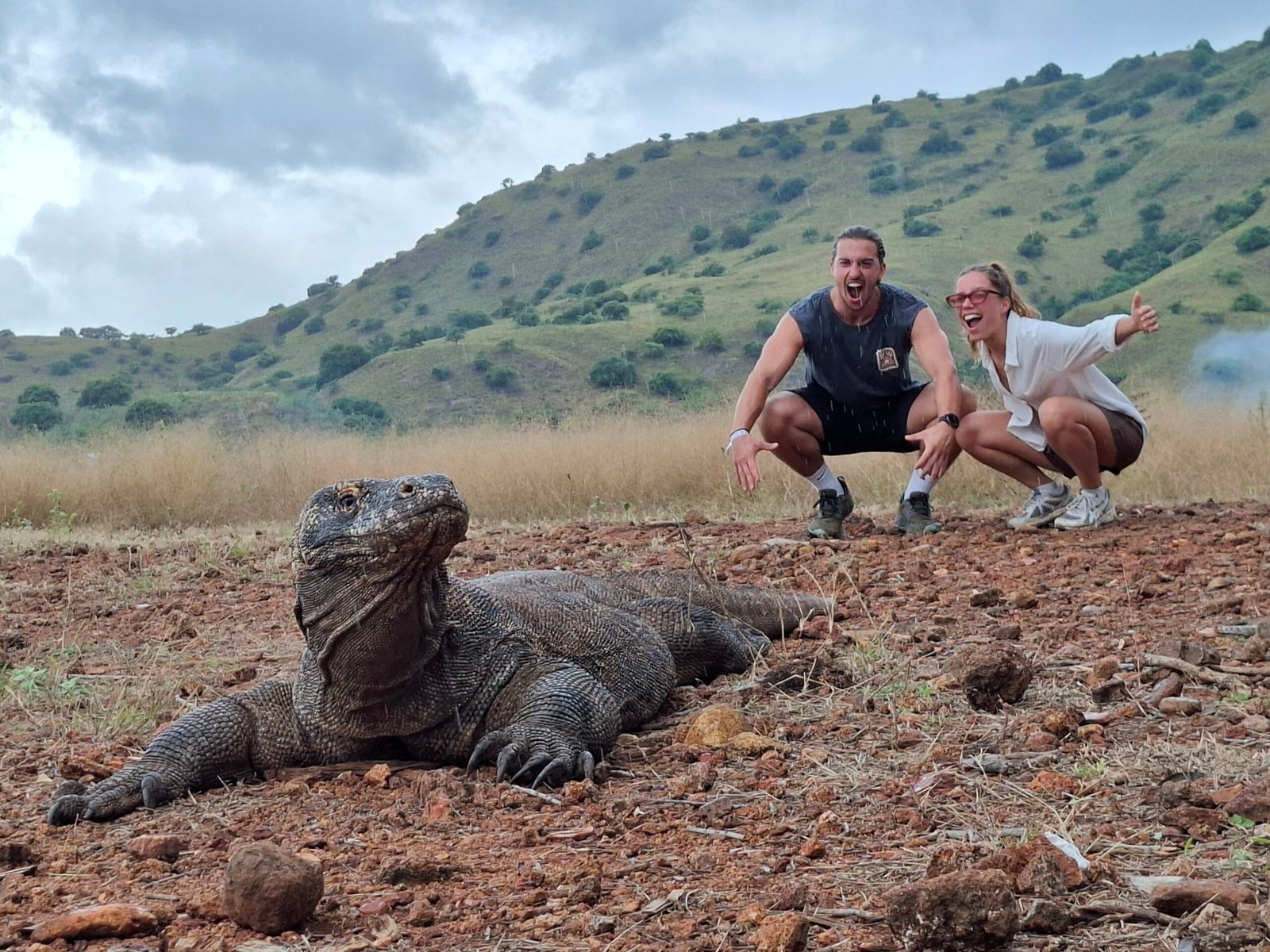
Getting a dramatic, shareable shot for your travel blog or social media feed is a dream for anyone on a Komodo Sailing Experience. But photographing apex predators demands a different kind of discipline. Flash photography can startle a Komodo dragon and trigger its attack instinct. In addition, behavioral studies from National Geographic warn that sudden movements like jumping or reflexively raising your arms can be interpreted by Komodo dragons as the panicked movement of prey or a threatening challenge.
If you want dramatic shots, use a low-angle technique from a safe distance with a zoom/telephoto lens. This will give the visual illusion that the Komodo dragon is enormous and imposing without requiring you to enter their danger zone.
5. Carbon Footprint and Conservation: Protecting the Dragon’s Fragile Home
Trekking on Komodo Island is not only about your personal safety it is also about the preservation of the habitat you are visiting. Komodo National Park is dominated by open, extremely dry savanna. According to conservation rules from the Komodo National Park Authority, visitors are strictly prohibited from littering (even the smallest piece of trash) or carrying fire-starting materials such as lighters or cigarette butts.
Data from the UNESCO World Heritage Centre warns that this ecosystem is extremely vulnerable to grass fires and plastic pollution. Leaving food scraps can also disrupt the Komodo’s metabolism and alter their natural hunting instincts, turning them into scavengers. Keeping the environment clean during your Komodo Sailing Experience is your real contribution to preserving this World Heritage Site for future generations.
Conclusion
Exploring the natural habitat of Komodo dragons is an extraordinary privilege. By respecting the rules of the wild and adhering to local ethical guidelines, you are not only keeping yourself safe from harm you are also contributing to ensuring that the last ancient dragons on Earth remain protected for generations to come.
Make sure your pinisi sails with an operator who prioritizes safety and environmental education. Prepare your body, trust your ranger, and get ready to experience a truly magical adventure!
Ready to test your adrenaline and witness the ancient dragons up close safely? Book your sailing journey with us and create unforgettable memories at sea.